The years we hope to have in good health
In a country where food is available around the clock, nearly three in four American adults have overweight or obesity. About 32 percent fall in the overweight range, and another 40 percent live with obesity. More than one in five children ages 6 to 11 live with obesity, too. We’ve lived with this public health crisis long enough for those numbers to sound ordinary. They shouldn’t.
The toll is measured in years. In one large study, between ages 40 and 75, adults with overweight spent about one fewer year free of major chronic disease. The difference was three to four years for adults with class I obesity and about eight years for those with more severe obesity. Those decades include the years many of us hope to step back from work, spend more time with our children and grandchildren, or finally take that trip we’ve been putting off. The chance to do those things in good health is part of what’s at stake.
What evidence actually shows
Children are growing up in a food environment adults built for them. In a November 9 Washington Post column, pediatrician Aaron Carroll argues that we should change that environment and stop leaning on school cooking classes as a response to childhood obesity. His argument rests in part on studies that found modest gains in children’s diets and little evidence of lasting changes in weight. He’s right to ask whether programs deliver what they promise. He’s wrong to dismiss cooking education on the strength of evidence that answers a different question.
Start with the research Carroll cites. The 2024 review in Appetite found modest gains in children’s cooking confidence and vegetable intake, with the strongest results in programs offering more than six hours of instruction. The Cochrane review looked across many kinds of diet and physical activity programs and did not isolate the effects of hands-on cooking instruction. And the 26 hours Carroll puts forward as a benchmark comes from research on comprehensive behavioral treatment for children with a high BMI. That finding tells us something about the intensity of clinical care. It cannot tell us how much time a child needs in a kitchen to learn to cook or start eating more vegetables.
We have evidence that hands-on programs can change what children eat. In Texas Sprouts, a randomized trial across 16 elementary schools, children in a yearlong program that combined cooking, gardening, and nutrition lessons ate more vegetables. The trial found no measurable effect on BMI over the school year. Both findings matter. Eating more vegetables is a worthwhile outcome, and whether those changes last or improve long-term health deserves its own study.
Make time to cook. Make time to eat.
A teaching kitchen changes the food environment in a concrete way. It gives children time to chop, stir, taste, and sit down to something they helped make. We know that time can change what happens at the table, too. In a randomized study of seated lunch time, children who had 20 minutes ate more of the fruits and vegetables they were served than when they had 10. Think about what we ask of children when we teach them to value food and then rush them through lunch. A culture that values food makes room for preparing it and for eating it.
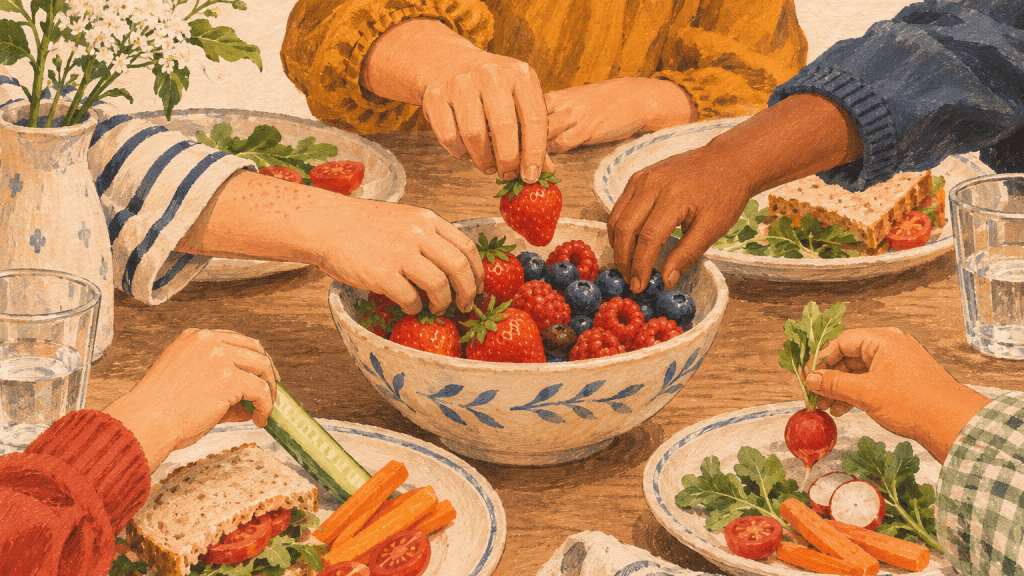
Teaching kitchens belong alongside healthier school meals, affordable food, and appropriate medical care. Children need a food system that makes it easier to eat well. They also deserve the chance to learn how to make a meal they want to eat, and enough time to sit down and enjoy it.

